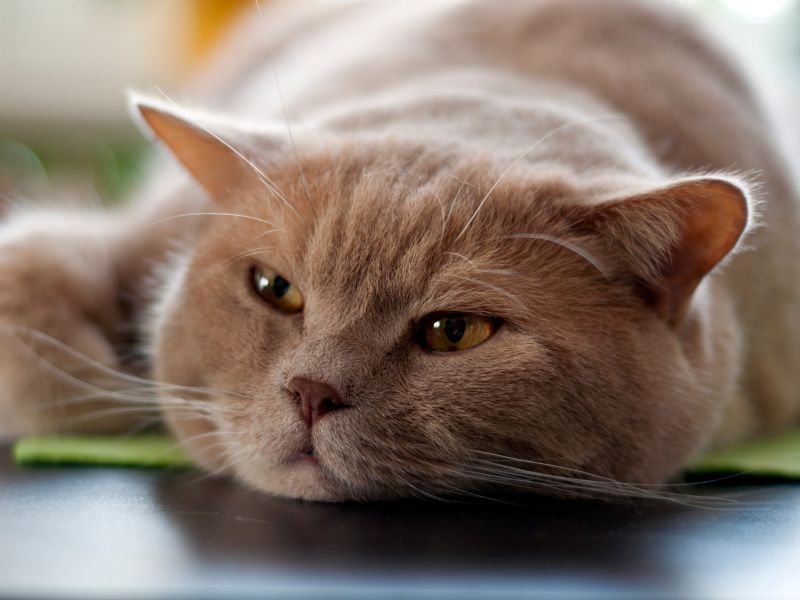
Choosing your first cat is less about finding the right breed and more about finding the right cat for your home. Personality varies from cat to cat, even within a breed, and Cats Protection notes that cats do not usually form an established character until they are at least a year old.
This guide helps you work out what kind of cat suits your life, flags the breeds that come with known health problems, and explains why an adult rescue cat is often a sensible first choice.
Start with your home, not a breed
Cats Protection suggests thinking about the type of home you can offer, how much time and money you can give a pet, and what you want from a companion. These questions turn that into a decision.
| Question | What the guidance says | What it points to |
|---|---|---|
| Kitten or adult? | Cats Protection says kittens demand a lot of time and patience, while adult cats are usually more settled and their character is already formed. International Cat Care says adult cats are less hard work than a kitten. | If you are new to cats or out at work during the day, an adult cat is often the easier start. |
| How long is the commitment? | International Cat Care points out that a cat is a kitten for about six months of a life that can last 14 years or more. | Choose for the adult cat you will live with, not the kitten. |
| How much grooming can you manage? | Cats Protection says long-haired cats need grooming once a day to prevent matting, and short-haired cats about once a week. | If daily brushing will not happen, choose a short coat. |
| Moggy or pedigree? | Cats Protection says pedigree cats are more likely to have an inherited condition such as heart disease. International Cat Care says some breeds are predisposed to health problems that can affect their quality of life. | A moggy (a non-pedigree cat) is a sound first choice. If you want a pedigree, research the breed’s health before anything else. |
| A quiet home or a busy one? | Cats Protection describes mature moggies aged seven and over as ideal for quieter households. In its advice for families with children, it says adult cats can be calmer, which suits many families. | Tell the rescue or breeder honestly about your household so they can match you well. |
| One cat or two? | International Cat Care notes that cats come from a largely solitary species and that relationships between cats can be fragile. | Think carefully before adding a second cat. If you want two, ask a rescue about a pair that already live happily together. |
| What will it cost? | International Cat Care lists the early costs: neutering, vaccinations, preventive health care, microchipping, insurance and equipment. | Budget for these before the cat comes home. |
Breeds often suggested for first-time owners
Breed descriptions are generalisations. Individual cats vary, so meet the cat and ask the breeder or rescue how it behaves at home. This table gives each breed’s usual reputation and the practical points to weigh.
| Breed | Often described as | Coat | What to plan for |
|---|---|---|---|
| British Shorthair | Calm and undemanding, content with gentle company | Short | Weekly grooming is usually enough for a short coat. |
| Russian Blue | Quiet, and a little reserved with new people | Short | A calm home and time to settle in. |
| Burmese | Playful and people-focused, wanting more interaction than the quieter breeds | Short | Daily play and company. |
| Ragdoll | Gentle and people-focused | Semi-long | Regular brushing. |
| Birman | Sociable and affectionate | Semi-long | Regular brushing. |
| Ragamuffin | Docile and tolerant of gentle handling | Semi-long to long | Regular brushing. |
| Maine Coon | Friendly and tolerant | Long | A large breed. Daily grooming and room for a big cat. |
This table does not cover breed health. Pedigree cats are more likely to have an inherited condition, so before you buy a pedigree kitten, ask your vet and the breeder which health tests apply to the breed, and ask to see the results.
Breeds to avoid or approach with care
Scottish Fold: not recommended
We do not recommend the Scottish Fold. The gene that folds the ears also changes the way cartilage forms. The Genetic Welfare Resource published by Science for Animal Welfare states that every folded-eared cat develops a bone and joint condition called osteochondrodysplasia to some extent, and that there are no carriers of the gene that are not themselves affected. The resource lists signs such as lameness, swollen joints, an abnormal walk, reluctance to move or jump, and significant pain.
Cats Protection says it would not recommend getting a Scottish Fold. It explains that the mutation affects all cats bred from Scottish Folds, and that even those without folded ears are still at risk of earlier-onset and faster-progressing arthritis. It warns that cats are very good at hiding pain, and says the disorder cannot be bred out of the breed. Choosing a careful breeder does not prevent it.
Flat-faced breeds: Persian and Exotic Shorthair
Persians often appear on beginner lists because of their quiet reputation, but their very flat faces come with health costs. International Cat Care says breathing problems (brachycephalic obstructive airway syndrome, or BOAS) are common in flat-faced Persians. It links the face shape with protruding eyes that are prone to problems such as keratitis and corneal sequestrum, eye discharge from short tear ducts, teeth that do not meet properly, and skin infections in the folds of the face. Persians also have a long coat that needs daily grooming.
RSPCA Australia names the Exotic Shorthair alongside the Persian as a flat-faced breed with significant welfare problems, including difficulty breathing, tear duct problems and dental problems. Its short coat makes grooming easier. It does not change the face.
International Cat Care also reports that polycystic kidney disease (PKD) was found in more than a third of Persian and Exotic Shorthair cats in the 1990s, and advises asking the breeder for proof of a negative PKD test. If you are drawn to either breed, talk to a vet before you choose.
Why a rescue cat is often a good first cat
A rescue cat, moggy or pedigree, has real advantages for a beginner:
- You can know the personality. An adult cat’s character is already formed. Cats Protection says it gets to know each cat in its care so it can match each one with a suitable owner.
- Experience is not always needed. The RSPCA says previous experience is not always necessary to adopt. Being honest about what you can offer, and willing to learn and take advice, matter more.
- Health care may already be under way. Ask the rescue which vaccinations, parasite treatments, neutering and microchipping the cat has had, and book a vet check soon after adoption.
In the Gulf, see our guide to rescuing a cat in Dubai.
Before your cat comes home
- Agree who in the household feeds, plays with and grooms the cat, and who pays the vet bills.
- Set up a quiet room with food, water, a litter tray, a bed, a scratching post and somewhere to hide.
- Register with a vet and book a check soon after the cat arrives.
- Use our new kitten checklist for a fuller list of supplies, and our guide to introducing a new cat if you already have one.
The bottom line
For a first cat, choose the individual over the breed. Decide honestly how much time, grooming and money you can give, and consider an adult cat whose personality is already known. If you want a pedigree, research its health first. We do not recommend the Scottish Fold, and flat-faced breeds such as the Persian and Exotic Shorthair carry health problems to discuss with a vet before you choose. For many first-time owners, an adult rescue cat matched to their home is a good place to start.
Sources
- Choosing a cat, Cats Protection (accessed 5 October 2026)
- Thinking of getting a cat?, International Cat Care (accessed 5 October 2026)
- Should I get a pet?, RSPCA (accessed 5 October 2026)
- Scottish Fold cats, Cats Protection (accessed 5 October 2026)
- Osteochondrodysplasia (Scottish Fold), Genetic Welfare Resource, Science for Animal Welfare (accessed 5 October 2026)
- Persian cats and brachycephaly, International Cat Care (accessed 5 October 2026)
- What are the health and welfare issues associated with exaggerated physical features in cats?, RSPCA Australia Knowledgebase (accessed 5 October 2026)
This article is general information, not a substitute for advice from your own veterinarian. If you are worried about your pet, please contact your vet.
🐾 The Meow Howl newsletter
New pet care guides, in your inbox
Join fellow dog & cat parents. We'll let you know when we publish new guides and tools. No spam.